
Why Clean Floor Mats Matter: Sanitation, Safety, and Replacement Timing
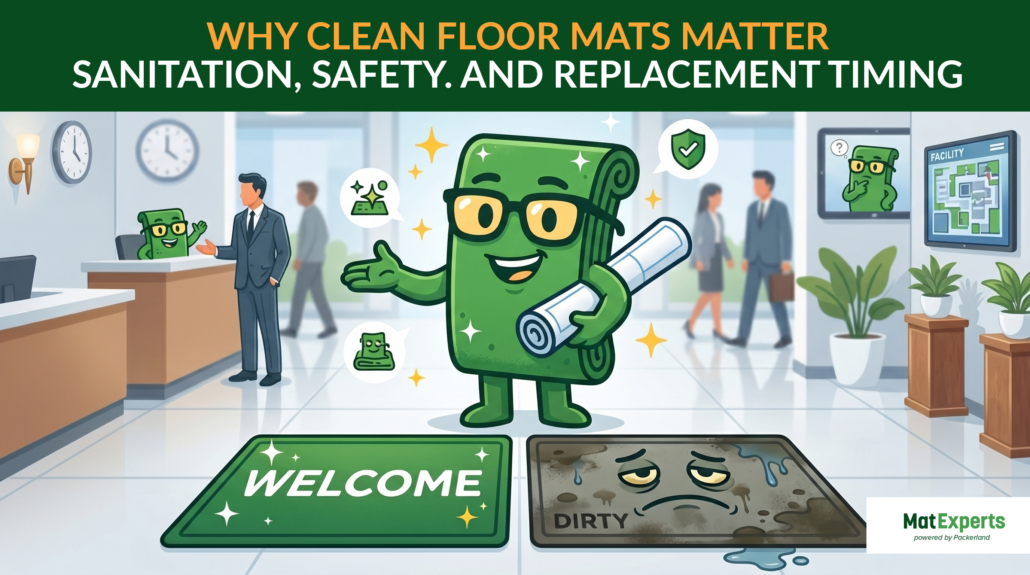
Floor mats do a lot of behind-the-scenes work. They trap dirt, absorb moisture, and help protect floors underneath from damage. With such an important job, it’s equally important to ensure that mats receive regular maintenance to keep doing their job safely and effectively.
When mats aren’t cleaned or replaced at the right time, they can stop working the way they should. Moisture lingers, debris builds up, and safety suffers—sometimes without being obvious at first glance.
This guide breaks down how often floor mats should be cleaned or replaced, why sanitation matters, and how to recognize when a mat has reached the end of its useful life. We’ll make it easy for you to make informed decisions that protect both your floors and the people walking on them.
Why Floor Mat Sanitation Matters
Mats are designed to capture dirt, moisture, and debris before they spread throughout your space. Over time, that buildup can affect more than just the appearance of your floor mats.
When mats stay damp or heavily soiled:
- Moisture can linger beneath the surface
- Dirt and debris can reduce traction
- Mats may begin to smell over time
- Overall performance (and safety) declines
In high-traffic spaces, especially busy homes, shared residential entrances, short term rentals, healthcare facilities, schools, and food-service environments, clean mats play a major role in maintaining a safer, cleaner space.
Organizations like the National Floor Safety Institute emphasize that mats should reduce risk, not introduce it. A mat that no longer lays flat, absorbs moisture, or stays in place can quickly become a safety concern rather than an advantage.
How Often Should Floor Mats Be Cleaned?
There’s no single schedule that works unviversally for every space. How often mats should be cleaned depends on:
- Foot traffic
- Weather exposure
- Placement (entryway vs interior)
- Type of mat and material
- Environment/use of mat
As a general rule:
- High-traffic entry mats need more frequent cleaning
- Mats exposed to moisture should be cleaned and dried to avoid staying damp for extended periods
- Interior mats may require less frequent attention but still benefit from routine care
Cleaning helps restore a mat’s ability to absorb moisture and trap debris. Without it, even well-designed mats can lose effectiveness faster than expected.
Can Floor Mats Harbor Bacteria or Mold?
Floor mats are meant to collect what comes in from outside, including moisture. If mats remain damp or aren’t cleaned regularly, they can become dirty, wet, and yes– moldy or full of bacteria.
That can sound scary, but it doesn’t mean mats are inherently unsanitary. What it does mean is that maintenance matters. Caring for your floor mats, including properly cleaning and drying, can help reduce moisture buildup and keep mats functioning as they should.
In spaces where health and hygiene are especially important, routine mat maintenance needs to be part of your overall cleanliness strategy—not an afterthought.
Is Vacuuming Enough to Clean Floor Mats?
Vacuuming is helpful, but it’s not always enough on its own.
Vacuuming removes loose dirt and debris, which is important for day-to-day upkeep. However, it doesn’t address what actually settles into the mat’s fibers over time. Below the surface, mats can hold onto moisture, oils, and residue from the environment they’re used in. Body oils and fine particles bind to fibers, changing how mats feel underfoot and reducing absorbency—even when they still look clean.
In certain spaces, buildup goes even deeper. Food and beverage residue, airborne dust and fine particles, and automotive oils or grease can work deep into fibers and backing—where vacuums can’t reach. Over time, that residue interferes with traction, shortens mat life, and makes mats more difficult to maintain.
Periodic deep cleaning helps restore performance and reduce lingering smells. How often that’s needed depends on traffic, use, and environment, but across the board it’s safe to say that relying on vacuuming alone is not sufficient over the long term.
How to Clean Floor Mats (Quick Steps)
- Shake out or vacuum loose debris.
- Spot clean stains as needed using a mild cleaner.
- Deep clean based on the mat type (wash, hose off, or scrub).
- Rinse thoroughly if soap is used.
- Dry completely before placing the mat back down.
- Check the edges and backing to confirm the mat lays flat and grips the floor.
When Should Floor Mats Be Replaced?
Even with good maintenance, floor mats don’t last forever. Over time, wear and buildup can reduce performance in ways that cleaning alone can’t fix.
Signs it may be time to replace a mat:
- Mat fibers look worn or matted down
- It’s not absorbing moisture well
- Unpleasant smells persist after cleaning
- The edges curl or the mat shifts underfoot
- The backing no longer grips the floor
When it’s time to replace the mat depends on foot traffic levels, exposure to different materials, and the environment where the mat is used. What matters most is whether or not the mat is still doing its job—trapping dirt, absorbing moisture, and staying flat and stable.
In some environments, replacement is a more practical option over cleaning. Automotive shops, for example, expose mats to fairly extreme conditions that aren’t so easy to wash out. Oils, grease, and shop chemicals don’t just sit on the surface—they penetrate deep into fibers and backing, where they’re difficult or impossible to fully remove.
In these cases, replacement isn’t wasteful—it’s practical. When cleaning just simply can’t do enough to restore traction or performance, replacing the mat is often the simplest, safest, and most cost-effective way to keep the workspace functioning as it should.
Are Washable Mats Enough on Their Own?
Washable mats are a great option for many spaces. Being able to clean and reuse a mat helps control everyday buildup and extend its useful life. But washing alone doesn’t mean a mat will perform the same way indefinitely.
Over time and repeated cleaning:
- Fibers can compress or break down
- Backing can lose grip on the floor
- Absorption can gradually decline
That means a mat can be freshly washed and still underperform. Even when a mat looks clean, wear at the fiber and backing level can affect how well it traps moisture, stays in place, and supports safe footing.
Washable mats still need to be evaluated periodically—not just for cleanliness, but for performance. When washing no longer restores absorbency, stability, or traction, replacement becomes the more effective option. Clean doesn’t always mean functional—and mats are no exception.
How Cleaning and Replacement Affect Safety
Clean, well-maintained mats play an important role in safety. When mats continue to absorb moisture, lay flat, and stay in place, they help:
- Improve traction
- Reduce damage to floors
- Support overall floor safety
When mats become oversaturated, worn down, or unstable, they can do the opposite: increasing slip risk instead of reducing it. That’s why sanitation and replacement timing go hand in hand with safety. A mat doesn’t need to look damaged to stop performing safely.
Material choice and construction also matter. As discussed in our guide to floor mat pile and backing, certain materials hold up better to repeated cleaning, heavy use, and demanding environments than others.
Choosing the Right Mat From the Start Helps
One of the simplest ways to reduce sanitation issues over time is choosing the right mat from the beginning.
Mats that are the right size, matched to the floor surface they’ll lie on, and designed for the traffic they see tend to stay cleaner longer and perform more consistently. If you’re still deciding which type of mat makes sense for your space, our guide on choosing the right floor mat walks through those considerations step by step.
Frequently Asked Questions About Floor Mat Cleaning and Replacement
How often should floor mats be cleaned?
Cleaning frequency depends on traffic, placement, and moisture exposure. High-traffic entry mats usually need more frequent cleaning than interior mats.
Can floor mats harbor bacteria or mold?
Mats that remain damp or heavily soiled can contribute to buildup over time. Regular cleaning and proper drying help reduce this risk.
Is vacuuming enough to clean floor mats?
Vacuuming removes loose debris, but it doesn’t address moisture or deeper buildup. Periodic deeper cleaning is usually needed to maintain performance.
When should floor mats be replaced?
Mats should be replaced when they no longer absorb moisture well, stay flat, or remain stable—even after cleaning.
Are washable mats truly sanitary?
Washable mats can be sanitary when cleaned and dried properly, but they still wear over time. Performance should be evaluated regularly.
Clean Mats, Safer Spaces
Floor mats are part of a safety system, not just a cleanliness routine. When mats are properly maintained—and replaced when performance declines—they help manage moisture, reduce debris tracking, and support safer footing throughout a space.
Understanding how mats perform over time makes it easier to spot when cleaning is no longer enough. A mat that looks fine can still lose absorbency, traction, or stability, quietly increasing risk.
MatExperts takes a performance-first approach to mat selection and replacement—helping businesses and homeowners choose mats that hold up to real-world conditions and continue doing their job long after installation.

Leave a Reply
Want to join the discussion?Feel free to contribute!